
Orangutan Trekking Sumatra: Ultimate Ethical Trek Guide
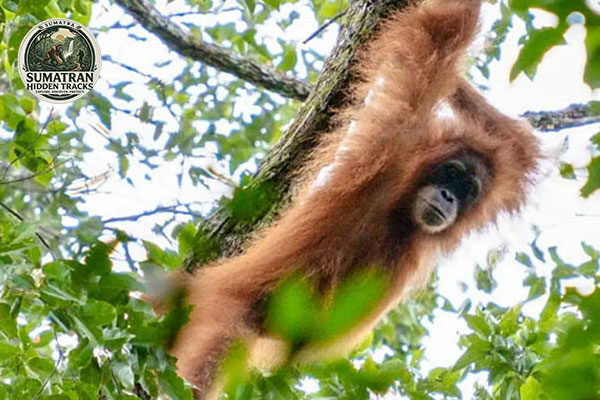
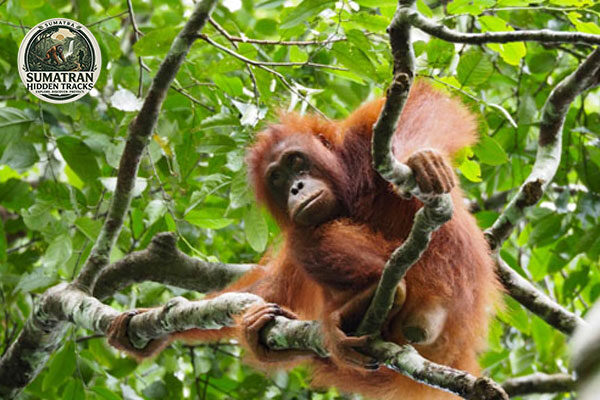
The air hangs heavy with the scent of damp earth and wild fig. A distant rustle in the canopy stops you in your tracks. Your guide raises a hand, a silent signal. Then, a flash of fiery auburn fur moves deliberately through the leaves. A mother, with a curious infant clinging to her chest, swings gracefully overhead. This is not a zoo enclosure. This is the primal, untamed heart of Sumatra, and the experience of orangutan trekking Sumatra is one that will fundamentally change the way you see the natural world.
Choosing to witness Asia’s only great ape in its natural habitat is a privilege that comes with responsibility. It is a physical journey through dense, mountainous jungle and an emotional one into the soul of a critically endangered ecosystem. At Sumatran Hidden Track, we do not simply offer treks; we facilitate a deep, respectful immersion into a world that has existed for millennia. Our approach strips away the mass-tourism veneer, focusing instead on silent observation, genuine conservation support, and the raw, unpredictable beauty of the Gunung Leuser Ecosystem.
Why the Sumatran Rainforest is the World’s Best Orangutan Sanctuary
The island of Sumatra is the last place on Earth where orangutans, tigers, elephants, and rhinos coexist in the wild. The epicenter of this mega-biodiversity is the vast Leuser Ecosystem, a UNESCO World Heritage site in constant jeopardy. Unlike the more touristed, flatter river systems of Borneo, the terrain here is rugged and mountainous. This very topography is what makes orangutan trekking Sumatra unique—it demands effort, but it rewards with unparalleled intimacy.
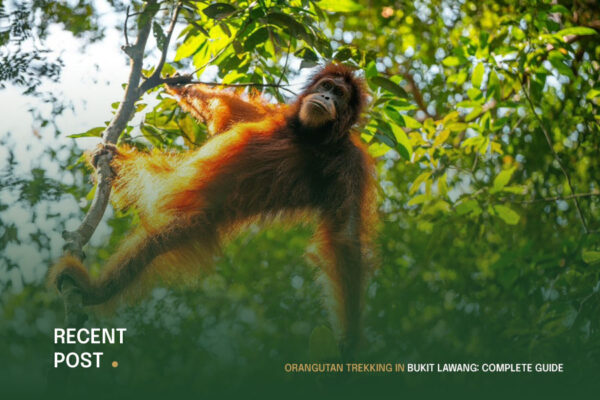
The hills of Bukit Lawang and the wilder valleys of Ketambe are the two primary gateways. Bukit Lawang, with its semi-wild population reintroduced from a former rehabilitation center, offers one of the highest sighting probabilities in the world. Here, you might encounter renowned matriarchs like Mina or Jacqueline. If you crave absolute isolation, however, the deep treks of the Ketambe region—where every orangutan is entirely wild—require a multi-day commitment in a landscape where the jungle dictates the schedule. We will help you choose the path that matches your spirit.
The Two Paths: Bukit Lawang vs. Ketambe
To truly understand this journey, you must understand the distinct characters of the two gateways. Your choice defines the rhythm of your entire expedition.
Bukit Lawang: The Accessible Wilderness
Nestled along a crystal-clear river, Bukit Lawang is the vibrant hub. The Bohorok River serves as both a lifeblood and a natural spa after a strenuous day.
- The Jungle Rhythm: You will likely see orangutans. Our guides expertly navigate away from any congestion, finding secluded ridges where a dominant male’s long call—a deep, guttural roar that announces his territory—echoes across the valley, sending shivers down your spine.
- The Physicality: The terrain is steep and often slippery. You will grip vines and roots, engaging your whole body. It is raw, physical, and deeply satisfying.
- The Reward: After hours of hiking, the trek often concludes near the river, where you can float back to the village on an inner tube, watching the jungle canopy drift serenely by.
Ketambe: The Deep Jungle Immersion
Further north, near the Alas River, lies Ketambe. This is not a backpacker hub; it is a research station gateway. The vegetation is denser, the jungle floor darker.
- The Raw Encounter: There are no semi-wild orangutans here. Every sighting is a pure, wild interaction. We have observed massive, cheek-padded males silently watching from only a dozen meters up. The silence here is heavier, the air thicker with the unknown.
- The Challenge: Multi-day treks mean setting up mosquito nets in the open and cooking simple, warm meals over a fire. This is a complete digital detox and a return to the essential.
- The Biodiversity: Ketambe is prime territory for spotting the critically endangered helmeted hornbill or hearing the elusive rustle of a sun bear.
Preparing Your Body and Gear for the Jungle
A successful expedition relies on surrendering comfort for preparedness. The jungle is generous to those who respect it and uncompromising to those who do not. We have guided trekkers of all ages, from children to active seniors, but honesty about physical fitness is vital.
The Physical Demand
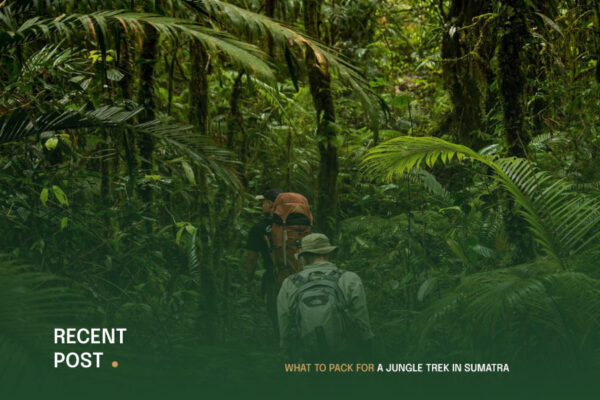
This is not a nature walk. A single-day trek involves 5 to 7 hours of hiking in 90% humidity. You will scale root systems and wade through crystal-clear streams. We recommend a pre-trip routine of stair climbing and balance exercises. If you opt for a 3-day orangutan trekking Sumatra expedition, mental stamina matters just as much as physical strength.
The Ethical Gear List
We provide a detailed list upon booking, but the non-negotiables are critical for your comfort.
- Footwear: Leech socks are ingenious. Wear them over your pants and under well-tractioned, breathable hiking shoes. Rubber shoes often outperform heavy boots that become waterlogged anchors.
- Protection: A simple salt bottle for leeches (we will show you how to use it) is safer than chemical sprays which contaminate the water source.
- Vision: Binoculars are essential, not optional. The orangutan you see will often be 20 to 30 meters up. A good pair reveals the soulful expression in their eyes.
- Waste Management: Every item brought in must come out. We supply a waterproof bag for all inorganic waste, ensuring the forest remains exactly as we found it.
Inside a Sumatran Hidden Track Expedition
What separates a premium trek from a standard march through the woods is the layered knowledge shared quietly on the trail. We believe the best guides are not just pathfinders; they are facilitators of profound moments.
The Silent Code of Observation
The forest has a language. Our senior guides, certified by the Indonesian Tourist Guide Association (HPI), interpret the chatter of the Thomas Leaf monkey alarm calls. A sudden silence often signals a predator nearby. When we locate an orangutan, we maintain a strict minimum distance of 10 meters. We never feed them, we never call them, and we absolutely never offer fruit to entice a photograph. Watching tourists chase an animal with a smartphone is a violation. Watching a mother teach her infant to weave a nest while you stand in silent awe—that is a genuine connection.
A Typical Day Unfolds
- The Dawn Start: An early departure from the guesthouse catches the orangutans feeding on ficus fruits just after their dawn wake-up, when they are most active.
- Reading the Forest: Our guide identifies medicinal plants like nepenthes and wild ginger, exotic insects like the giant millipede, and even tracks from the previous night’s tiger patrol.
- The Summit Lunch: We unpack nasi lemak wrapped in banana leaves at a viewpoint where hornbills glide below you. The food tastes different here—earthy, earned.
- The Descent and Safety: The pace is slow and deliberate. On the most vertiginous slopes, we use a fixed rope system, ensuring your safety with a firm, steadying hand.
- The Camp (Multi-day): At our riverside camp, as dusk falls, you will hear the gibbons’ haunting duet—an orchestra no city can ever replicate.
Guaranteeing an Ethical Encounter
The term “ethical tourism” is easily thrown around. We put it into practice with an operational manual we call the Green Protocol.
- Small Groups Only: We cap our treks at a maximum of 4 people per guide. This minimizes our impact on the forest floor and ensures you actually hear the environment, not human chatter.
- Community-Led Conservation: We rotate trekking teams among local families. When a former farmer sees a living orangutan bringing a stable livelihood to his cousin, he is far less likely to sell ancestral land for a palm oil plantation. This direct economic link is the strongest conservation tool we have.
- The No-Selfie Policy: We are strict about this. Turning your back to a semi-wild male orangutan for a selfie is both dangerous and deeply disrespectful. Our guides will ask you to secure your phones until the right moment arrives, ensuring safe distance and authentic observation.
Why Book Your Expedition with Us?
There is no shortage of touts offering jungle trips in Sumatra. Navigating the difference in quality can be a gamble. We remove that uncertainty entirely.
We Are Legal and Fully Insured
Sumatran Hidden Track operates with full legality under a registered Indonesian business permit. This is not just paperwork; it ensures you are covered by our comprehensive insurance policy. In the unlikely event of an evacuation, we have a clear, rapid-response medical pathway coordinated directly with hospitals in Medan.
Transparent, All-Inclusive Pricing
Our pricing model respects both your budget and the forest. Our rates reflect fair wages for our porters and guides, high-quality camping equipment, and national park permit donations.
- Booking Simplicity: A 20% deposit secures your date. This deposit is fully transferable should weather or travel plans shift unexpectedly. The remainder is paid in cash (IDR) upon safe arrival in Bukit Lawang or Ketambe.
- No Hidden Costs: The price we quote covers your park permits, guide fees, all meals on the trek, camping gear, and the return tube-rafting ride. We guarantee you will not face surprise fees.
The Sumatran Hidden Track Guarantee
If, against the rhythm of the wild, you do not see a single orangutan on your two-day trek (a very rare occurrence), we will offer you a significant price reduction for an additional day to try again. We trust the forest and our scouts’ expertise implicitly, and we want you to leave with the encounter you came for.
Frequently Asked Questions (FAQ)
What is the best time of year for orangutan trekking Sumatra?
While trekking is possible year-round, the dry season roughly between April and October offers the most comfortable, less slippery trails. The “fruit season”—often peaking in November-December and again in late summer—sees orangutans descending lower to feed, potentially offering closer sightings. Even in the wetter months, rain usually falls in heavy but short afternoon bursts, leaving the mornings beautifully clear for trekking.
Is the trek dangerous?
The wildlife is not the danger if you follow our protocol. The biggest challenge is the physical terrain: steep, muddy inclines. Our guides are trained in wilderness first aid and navigation. We take calculated risks and never compromise on your safety. Leeches are common but completely harmless, and we will teach you how to manage them effectively and calmly.
Do I need to be super fit to see orangutans in Sumatra?
You do not need to be a marathon runner, but a reasonable baseline fitness level is essential. If you can hike comfortably in a hilly country park for 5 hours, you will manage a 1-day trek. For longer, multi-day expeditions into deeper primary forest, a higher degree of stamina and flexibility is required. The reward, however, always outweighs the exhaustion.
Can I touch or feed the orangutans?
Absolutely not, under any circumstances. Sumatran orangutans share 97% of our DNA and are highly susceptible to human diseases, even a common cold. Touching or feeding them is strictly illegal and biologically catastrophic. We maintain a safe, respectful distance at all times to protect their immune systems and preserve their wild, independent nature.
What if I have specific dietary restrictions?
Our camp cooks are miracle workers. Whether you follow a strict vegan diet, require gluten-free meals, or have specific food allergies, simply inform our team during the booking process. We provide abundant fresh tropical fruit, traditional Indonesian dishes like gado-gado, and custom meals that keep your energy high without any compromise.
Take the Next Step into the Canopy
The jungle floor trembles with the quiet, urgent pulse of an ecosystem at risk. To witness the Sumatran orangutan is to become an active voice for its protection—to trade the algorithmic hum of modern life for the organic rhythm of Earth’s most ancient pharmacy. We invite you to step off the beaten track and into a story that has been unfolding for millions of years, one that you can witness ethically and intimately. Stop wondering what the rainforest sounds like. Walk with us, listen to the gibbons, and feel the soil under your feet.
Your expedition into the wild heart of Sumatra awaits. [Speak with our team today to begin customizing your journey.]
Contact
WhatsApp: +62 851-9554-0804
Telephone: +62 851-9554-0804
Email: sumatrahiddentrack@gmail.com