
Sumatra Rainforest Adventure: Why Going Deeper Changes Everything
The first time you step away from the clearing and into the canopy’s shadow, the air changes. It becomes thicker, filled with sounds that don’t exist in cities. That moment marks the beginning of every real Sumatra rainforest adventure—and it has almost nothing to do with what you’ve seen on screens.
We have spent years guiding people through these forests. What we know now is this: most travelers arrive with expectations shaped by highlight reels. They want the orangutan sighting. They want the waterfall photo. Those moments happen, yes. But they are not what makes the feeling stick with you long after your boots have dried.
What stays is the silence between bird calls. The way a fig tree’s roots wrap around a slope like veins. The knowledge that you are walking through a system that has been evolving for over 50 million years.
This is not a standard travel guide. We will walk you through what a genuine Sumatra rainforest adventure actually demands, what it offers, and how to approach it with the respect it deserves.
Sumatra Rainforest Adventure Is Not a Walk in the Park
We need to be honest about this upfront. The Sumatran rainforest is not a curated botanical garden. There are no paved paths in the deep interior, no signposts telling you where to stand for the best view.
The forest floor is uneven. Humidity regularly exceeds 85%. Rain can arrive without warning and transform a manageable trail into slick, red clay within minutes. These are not obstacles to endure. They are the conditions that make the ecosystem what it is.
Sumatra’s rainforest spans multiple protected areas, but the three most significant for trekking are:
- Gunung Leuser National Park in the north, part of the larger Leuser Ecosystem, which is the last place on Earth where orangutans, tigers, elephants, and rhinos still coexist in the wild
- Kerinci Seblat National Park running along the Bukit Barisan mountain spine, home to the highest peak in Sumatra and the critically endangered Sumatran tiger
- Way Kambas National Park in the south, where lowland dipterocarp forest meets coastal swamp ecosystems
Each of these requires a fundamentally different approach. Gunung Leuser offers the highest probability of orangutan encounters. Kerinci Seblat demands significant elevation gain and is suited for those wanting summit objectives alongside jungle immersion. Way Kambas provides a quieter, less-trafficked window into lowland ecology.
Understanding these differences matters because the term Sumatra rainforest adventure gets applied to everything from a half-day stroll near Bukit Lawang to a two-week expedition traversing the Leuser buffer zone. What you encounter depends entirely on how far you go and who guides you there.
What Actually Happens Inside the Forest
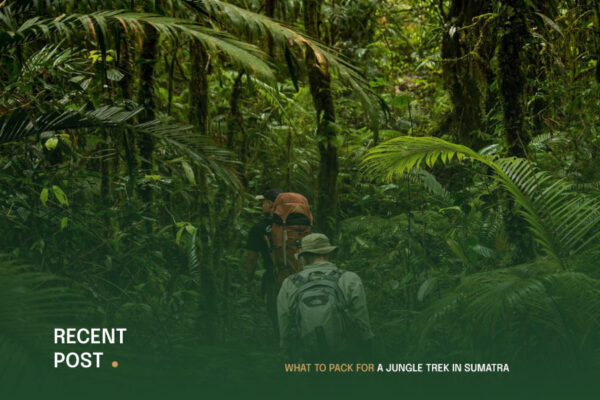
Let us move past the brochure language and describe a typical day on a multi-day jungle trek. This is what we prepare our guests for before they arrive.
Morning starts early. The forest wakes up between 5:30 and 6:00 AM. Siamang gibbons begin their territorial calls, a sound that carries for kilometers through the canopy. Breakfast is typically simple: fresh fruit, nasi goreng packed in banana leaves, strong Sumatran coffee brewed over a portable stove. We break camp before the sun climbs too high because animal activity peaks in the cooler morning hours.
Midday is for slow observation. The heat forces most mammals into rest. This is when we focus on the micro-details that casual visitors miss: the way a Rafflesia bud pushes through the forest floor, the architectural precision of a termite mound, the specific alarm calls that indicate a predator is nearby. Our guides carry decades of knowledge about these signals. They can identify bird species by sound alone and recognize individual orangutan nests built in the canopy above.
Afternoon brings unpredictability. Weather shifts fast. We teach every group how to read cloud patterns over the canopy. When rain hits—and it will—you learn why we insist on dry bags and quick-dry fabrics. The forest becomes louder during rain, not quieter. Water hitting broad leaves creates a percussive soundtrack that is, frankly, one of the most peaceful sounds you will ever hear.
Evenings are for rest and reflection. Camps are set near rivers when possible. The sound of flowing water masks human presence and increases chances of wildlife approaching. Dinner is cooked over a fire. Conversations happen in low voices. Headlamps stay dim to preserve night vision. Sleep comes easily because your body has been engaged in constant, low-grade physical problem-solving for twelve hours straight.
This rhythm repeats, but no two days are identical. That is the core of it. The forest does not perform on a schedule.
The Wildlife You Will See—and the Wildlife You Will Not
We want to address the question every first-time trekker asks: Will I see an orangutan?
In Gunung Leuser, the probability is high. The Bukit Lawang side of the park hosts a significant semi-wild and wild population. Our guides know their frequent feeding trees, their travel corridors, and their individual nesting patterns. On a three-day trek, sightings occur on roughly 80% of trips.
But we want to focus on what that number hides.
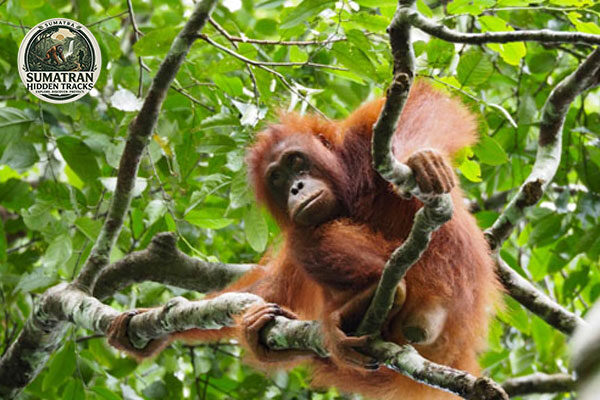
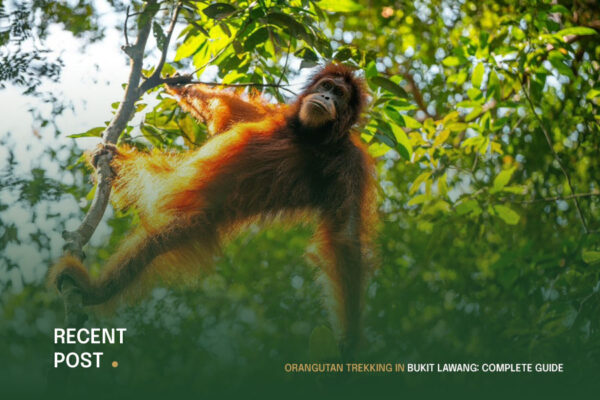
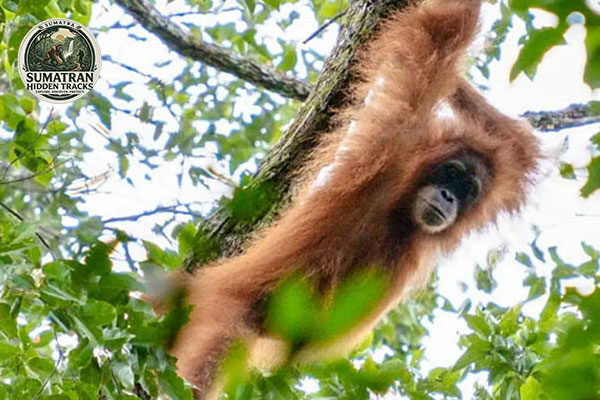
Seeing an orangutan in the wild is not like seeing one in a rehabilitation center. There is no feeding platform. No guaranteed proximity. The animal is often 20-30 meters up in the canopy, visible as a dark shape moving deliberately through branches. Sometimes you only see the rustle of leaves and the silhouette of a broad back. That is still a sighting, and it is still extraordinary.
The creatures you will almost certainly encounter are smaller but equally fascinating:
- Thomas’s leaf monkeys, which leap between trees with an almost reckless precision
- Macaques, particularly pig-tailed and long-tailed species, which are far more intelligent and socially complex than their common reputation suggests
- Hornbills, including the enormous rhinoceros hornbill, whose wingbeats sound like distant helicopter blades
- Monitor lizards in riverbank habitats, some reaching over two meters in length
- Flying lizards (Draco genus) that glide between tree trunks using extended ribs and skin flaps
The Sumatran tiger and Sumatran rhinoceros exist in these forests. They are real. You will almost certainly never see one. Their populations are critically small and they avoid human contact with extreme caution. The closest you will get is recognizing their tracks, their scrapes, or their scat. A skilled guide will show you these signs and explain what they reveal about the animal’s movement and behavior.
This is where the difference between a superficial trek and a genuine Sumatra rainforest adventure becomes clear. A surface-level journey feels incomplete without a charismatic animal sighting. A deep engagement finds equal value in the evidence of presence—the mark left on a tree trunk, the scent on the air—because that evidence tells a larger story about a still-functioning ecosystem.
Read also >> Orangutan Trekking Sumatra
How We Structure Our Expeditions
We follow a set of protocols developed through years of operating in these forests. These are not abstract philosophies. They are practical, tested systems designed to maximize safety, minimize ecological impact, and create the conditions for meaningful wildlife encounters.
- Small Group Guarantee
We cap every expedition at a maximum of six participants. This is not a marketing tactic. Smaller groups move more quietly through the forest. They produce less scent, less vibration, and less visual disturbance. Animals tolerate their presence more readily. For you, this means a fundamentally different encounter than moving in a large, noisy column. - The Guide Ratio
For treks of three days or longer, we assign a minimum of two guides per group. One leads, reading the trail and scanning the canopy. The second watches the rear, monitors participant fatigue, and ensures no one drifts from the group. Both guides carry emergency communication equipment and comprehensive medical kits. - Customized Route Planning
We do not run fixed routes. Before every expedition, our lead guide assesses recent animal movement data, rainfall patterns, river levels, and the physical conditioning of the group. The route is designed accordingly. This flexibility means we can adapt to changing conditions in real time rather than forcing a pre-determined path. - Leave No Trace, Enforced
Every item carried into the forest comes back out. Organic waste is buried at appropriate depth away from water sources and trails. No food is offered to wildlife under any circumstances. The habituation of wild animals to human food creates dangerous dependencies and alters natural behavior. We explain these protocols during the pre-trek briefing so every participant understands not just the rulebut the reasoning. - Pre-Trek Preparation Session
The day before departure, we conduct a 60-90 minute session covering: gear inspection, leech management, river-crossing technique, wildlife encounter protocols, emergency procedures, and cultural guidance for interactions with local communities near the forest boundary. This session eliminates uncertainty and allows you to enter the forest feeling prepared rather than anxious.
Practical Information Before You Go
We want you to arrive equipped with clear, actionable information. Here is what matters most.
Physical Preparation
A multi-day Sumatra rainforest adventure is physically demanding but does not require elite fitness. What it demands is stability and endurance. You will be walking on uneven terrain for 4-7 hours daily with a light pack. In the months before your trek, focus on: stair climbing with a loaded daypack, balance exercises on uneven surfaces, and cardiovascular conditioning that keeps your heart rate elevated for sustained periods. The goal is not speed. The goal is the ability to remain present and observant even when your body is tired.
Gear Essentials
- Footwear: Lightweight hiking boots with aggressive tread and ankle support. Waterproofing fails eventually in tropical humidity; quick-drying materials matter more.
- Clothing: Long-sleeved, lightweight, quick-dry shirts and pants. Cotton becomes heavy when wet and dries slowly. Bring two sets: one for moving, one for camp.
- Leech socks: We provide these, but bring your own if you have specific sizing needs. They are not optional in wet season.
- Dry bags: Everything in your pack should be inside sealed dry bags. Electronics get double-bagged.
- Headlamp with red light mode: Red light preserves night vision and attracts fewer insects.
- Water purification: We carry filtration systems, but personal tablets or a SteriPen provide a backup layer.
Best Time to Go
Sumatra has two primary seasons. The dry season runs roughly from April to October and offers more predictable trail conditions. The wet season from November to March brings heavier rainfall but also fewer visitors, more active amphibians, and a dramatically greener forest. Both seasons have advantages. We operate year-round and adjust routes based on conditions.
Health Considerations
Malaria prophylaxis is recommended for lowland forest areas. Consult a travel medicine specialist at least six weeks before departure. Leech bites are harmless but bleed freely and can become infected if scratched excessively. We carry basic antiseptic and bandaging supplies. Any specific medical conditions should be discussed during the booking process so we can plan accommodations accordingly.
Why the Guide Matters More Than Anything Else
We will close our main discussion with something that sounds obvious but gets overlooked constantly: the quality of a Sumatra rainforest adventure depends almost entirely on the quality of the guide.
A certified local guide who grew up in or near the forest carries knowledge that cannot be replicated by an app, a guidebook, or a foreign expedition leader on rotation. They recognize individual trees by their bark texture. They know which river crossings become dangerous after specific rainfall amounts. They can smell a durian tree in fruit from a hundred meters. They have spent thousands of hours observing the same animal families and understand their behavior across generations.
This is not romanticism. It is practical knowledge accumulated through daily, lifelong exposure to a specific environment.
We work exclusively with guides who meet three criteria: formal certification from the national park authority, a minimum of five years leading multi-day jungle treks, and demonstrated fluency in wildlife behavior interpretation. Many of our senior guides have been guiding in these forests for over fifteen years. They are the reason our guest safety record remains spotless and our wildlife sighting rates remain consistently high.
When you book with us, you are not hiring a porter who knows the trail. You are hiring an interpreter who can translate the forest’s language into something you can understand and appreciate.
Closing and Next Steps
A real Sumatra rainforest adventure does not begin when you enter the trees. It begins the moment you decide to stop settling for surface-level travel and start seeking journeys that require something from you in exchange for what they offer.
The Sumatran rainforest is one of the most biodiverse places remaining on Earth. It is also one of the most threatened. Spending time inside it—moving through it slowly, quietly, respectfully—changes how you understand the relationship between human beings and the rest of the living world.
We operate expeditions ranging from two-day introductory treks to week-long traversals of remote forest corridors. Every trip is built around the specific group, the current conditions, and the kind of encounter you are hoping to have.
Contact us through the Sumatran Hidden Track website to discuss your plans. We will ask about your fitness, your interests, and any concerns you have. From that conversation, we will propose a tailored itinerary that matches what you want with what the forest can realistically offer during your travel window.
The forest has been here for millions of years. It is worth preparing for properly.
Frequently Asked Questions
How dangerous is a Sumatra rainforest adventure really?
The primary risks are slips and falls on uneven terrain, dehydration, and insect-borne illness. With proper footwear, adequate hydration, and appropriate prophylactic medication, these risks are manageable. Serious wildlife conflicts are extremely rare; wild animals avoid human contact. Our guides carry satellite communication devices for emergencies, and we brief every group on safety protocols before departure. In over a decade of operation, we have maintained a clean safety record with zero serious incidents.
What happens if I cannot complete the trek?
We discuss physical limitations openly during the pre-trek briefing. If a participant needs to turn back, one guide accompanies them to the nearest exit point while the other guide continues with the remaining group. Our routes always maintain proximity to access points that allow for early extraction. Your safety and well-being take priority over completing a planned itinerary.
Will I definitely see orangutans?
In Gunung Leuser, sightings occur on approximately 80% of multi-day treks. We cannot guarantee wildlife sightings because these are wild animals in a vast habitat, not animals in an enclosure. What we can guarantee is that our guides will maximize your chances through their knowledge of feeding sites, travel corridors, and nesting areas. Many guests who do not see orangutans still describe their journey as transformative because of everything else the forest reveals.
How do you handle leeches?
Leeches are a natural part of the ecosystem. We provide leech socks to every participant. We teach you how to check for them during rest breaks and how to remove them safely if one attaches. The bites are painless and generally stop bleeding within a few hours. Most guests find that the initial discomfort with the idea of leeches fades quickly once they witness the forest’s overwhelming beauty. The leeches become a minor detail, not a defining feature.
Can I book a trek if I am traveling alone?
Yes. Solo travelers can join scheduled group departures when availability permits. We also arrange private solo treks with adjusted guide ratios for safety. The forest journey does not require a partner; it requires attention, patience, and a willingness to be present. Solo travelers often report that the solitude feels particularly immersive because there are fewer social distractions between them and their surroundings.
Contact
WhatsApp: +62 851-9554-0804
Telephone: +62 851-9554-0804
Email: sumatrahiddentrack@gmail.com